

Why Kona Coffee Is So Rare: A Place-Rooted Story
On the slopes of Hawaiʻi Island, coffee begins with a place that is both beautiful and remarkably small. Kona coffee is rare because it grows only in a limited region on Hawaiʻi Island, much of it comes from small farms, ripe cherries are picked by hand, and authentic 100% Kona coffee must come from a tightly defined growing area, all of which keep supply low and large-scale production difficult.
That sense of place is part of what makes Kona coffee so rare. Morning light settles over rows of coffee trees, while clouds gather in the afternoon over the volcanic landscape of Kona. Here, growing coffee is a careful process shaped by the land, the volcanic soil and microclimate, and the people who tend it.
For coffee drinkers, coffee enthusiasts, and shoppers trying to understand what sets Kona apart, the answer is not just scarcity but how that scarcity is created. The coffee grows within a limited region, on small family farms where ripe cherries are carefully picked by hand throughout the harvest.
So why does authentic Kona command such a premium? The story starts with the Kona Coffee Belt and extends to farming, labor, production costs, and the difference between authentic 100% Kona coffee and blends. Understanding those factors helps you judge price, spot authentic products, and better appreciate the landscape, farming culture, and craftsmanship behind this specialty coffee.
The Kona Coffee Belt on the Big Island — Limited Growing Region

Kona coffee begins with geography. The Kona Coffee Belt is a narrow stretch along the western slopes of Hawaiʻi Island, where the landscape rises toward Hualālai and Mauna Loa. Kona coffee is grown exclusively in the kona district, in a roughly 30-mile strip on Mauna Loa that is about one to two miles wide.
That limited geography matters. Unlike coffee grown across broad agricultural regions, Kona coffee comes from a very specific part of the Big Island. Farms are scattered along volcanic slopes, with coffee trees growing at elevations that can vary considerably across the region. The combination of elevation, terrain, and geographic restrictions naturally puts a limit on how much Kona coffee can be produced.
The days in Kona add another layer to the story. Coffee plants benefit from sunny mornings before afternoon clouds and gentle rain move across the slopes. The volcanic landscape also provides well-drained soil, creating conditions in which coffee cherries can develop gradually.
Together, these characteristics make the Kona Coffee Belt more than a place on a map. Its limited size is one reason authentic Kona coffee remains difficult to produce in large quantities.
Volcanic Soil, Microclimate, and Specialty Coffee Quality
The land around Kona does more than provide a place for coffee cultivation. Its rich volcanic soil and volcanic landscape help create the conditions that have shaped Kona coffee for generations. The region's well-drained, slightly acidic volcanic soil supports the deep root growth of coffee plants, while the combination of elevation, rainfall, and temperature helps shape how the cherries develop.
Climate and Soil Conditions
Kona's weather also follows a distinctive rhythm. Coffee plants receive sunny mornings, followed by cloud cover and gentle rain in the afternoon, then mild nights. At higher elevations, cooler conditions can slow the development of coffee cherries, giving them more time to mature.
These growing conditions are part of what gives Kona coffee its distinctive character and flavor complexity. Depending on the farm, elevation, and roast, drinkers may notice qualities such as milk chocolate, caramel, brown sugar, nuts, or fruit. Kona's high-quality beans are primarily the Kona Typica variety of Arabica coffee. The environment does not create the coffee on its own, but it provides the foundation for the farmers and roasters who bring those characteristics forward.
Small Family Farms and Local Culture
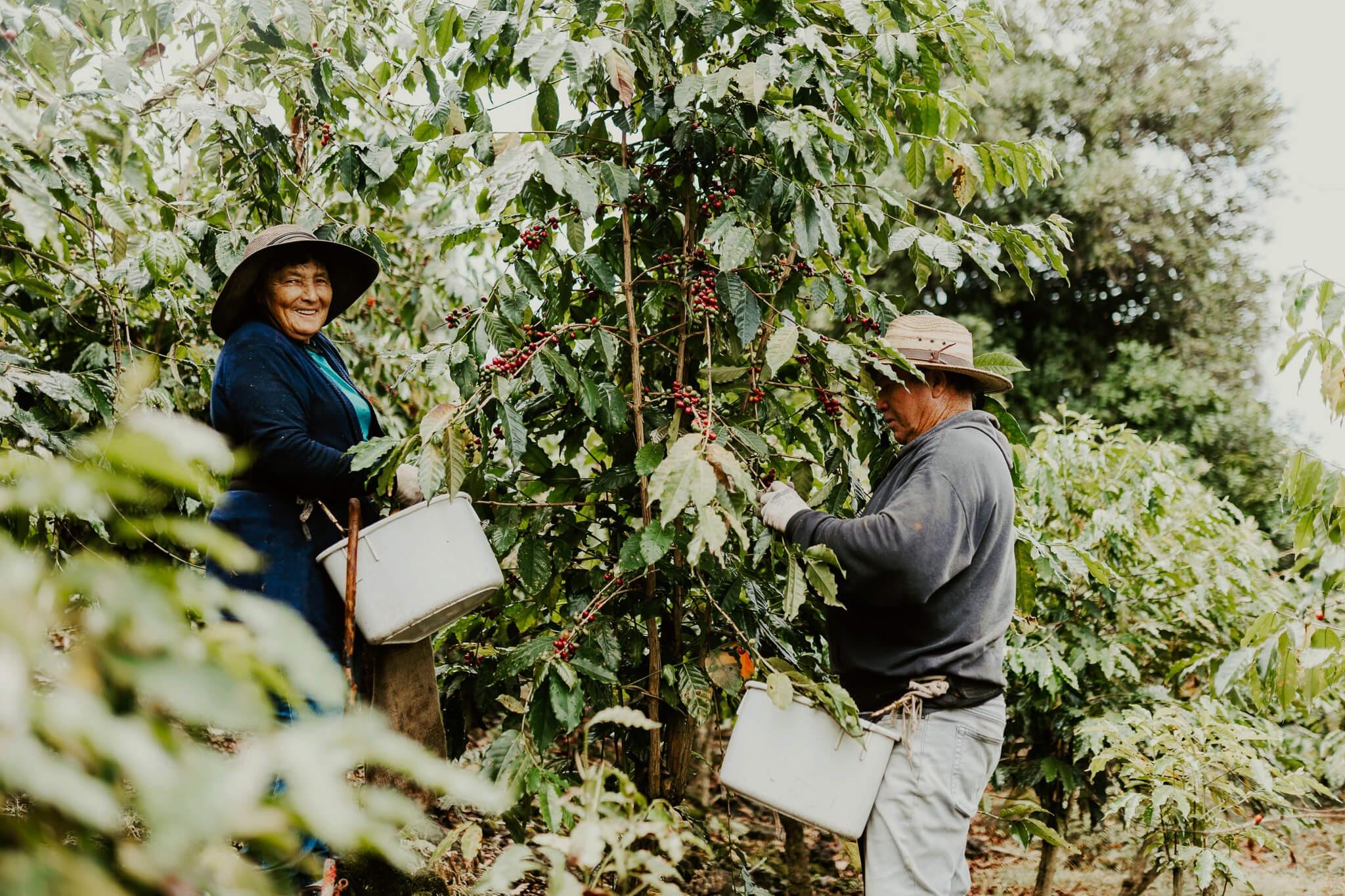
Kona's coffee story is also a story of small farms. Rather than vast plantations stretching across hundreds of acres, much of Kona's coffee has traditionally been grown by families, with many of these small farms run by Hawaiian farmers and kona farmers working relatively small pieces of land.
This scale changes the way coffee is cared for. On a small farm, the coffee trees are not simply part of a large production system. Farmers spend time observing the trees, watching the cherries develop, and responding to the conditions of a particular season, and they stay directly involved in quality control as they grow coffee on their own land.
Knowing when cherries are ready and how to respond to each season takes experience and care.
Small-scale farming also helps explain Kona coffee's limited supply. Production cannot simply be expanded overnight to meet increasing demand, and these conditions make it harder to scale than in other coffee growing regions.
Labor-Intensive Harvesting Practices

Hand-Picking and Harvesting
One of the most labor-intensive parts of Kona coffee production happens when the cherries are ready to harvest. Instead of picking everything at once, workers hand-pick only the ripest cherries from the trees so only ripe cherries are used.
Coffee cherries on the same tree do not necessarily ripen at exactly the same time. That means harvesting is not a single event. Workers return to the same trees multiple times during the season, picking the ripest cherries while leaving others to mature.
This labor-intensive harvesting process takes patience. Because Kona coffee is grown on steep volcanic slopes, mechanized harvesting is limited, so it is 100% hand-harvested rather than strip-picked in a way that mixes ripe and unripe cherries. Along the kona coast, young volcanic soils and steep terrain help shape this labor-heavy harvest model. For small farms, the process requires considerable time and human effort throughout the harvest season.
That work matters to the final cup. Hand-harvesting improves quality and consistency by avoiding unripe cherries and supporting a careful roasting process.
The individual attention required to harvest a relatively small amount of coffee helps explain Kona's rarity. Limited land and human labor naturally place another limit on production, and many producers work in small batches to maintain quality control.
Why Kona Coffee Costs More to Produce
Understanding why Kona coffee is so expensive begins with the work required at every stage, from caring for the trees to harvesting, processing, and preparing the beans for roasting, all of which contribute to high production costs.
Labor is a major part of that work. Because ripe coffee cherries are carefully picked by hand, Kona coffee farmers need people in the fields throughout the harvest season. Kona also costs more than most coffee because it depends on hand labor and small-farm production instead of large-scale efficiency. That higher cost can account for roughly 30–40% of the final cost, and the small size of many Kona coffee farms also means there are fewer opportunities to spread equipment and operating costs across a very large harvest in Hawaiʻi.
After harvesting, the cherries still need to be processed, dried, sorted, and prepared for roasting. These steps require time and care, adding to production costs in such a limited region, while strict labor laws and environmental regulations in Hawaiʻi raise the true cost as well. That is also why Hawaiian coffee is priced outside the typical commodity model. The premium price of Kona coffee reflects not only its reputation, but also the land, labor, and craftsmanship behind each small batch; that helps explain coffee prices that average about $68.95 per pound, with Kona coffee sold at premium prices because of limited supply and high demand. These conditions place it among the most expensive coffees, and among expensive coffees more broadly.
Why Authentic 100% Kona Coffee Is Especially Rare
There is another reason genuine Kona coffee is difficult to find: not every coffee labeled “Kona” is made entirely from Kona-grown beans. For coffee to be described as 100% Kona coffee, the beans must come from the designated Kona growing region on Hawaiʻi Island, not other regions, and true Kona coffee is subject to strict grading standards enforced by state regulations, with exported Kona required to meet certification standards from the Hawaii Department of Agriculture.
This distinction matters because Kona coffee has become a recognizable name far beyond the farms where it is grown. Kona blends can combine a portion of Kona coffee with beans from other origins. Some misleading blends use very little Kona content while trading on the Kona name. The result may still be Hawaiian coffee from Hawaiʻi, but it is not the same as a bag of 100% Kona coffee beans from the Kona growing region.
For shoppers, the label is worth paying attention to. Look for clear wording such as “100% Kona Coffee,” along with information about the farm or estate and the coffee's origin. A transparent label helps you understand what you're actually buying. The certification process helps verify superior quality, because oversight from the Hawaii Department of Agriculture helps confirm authenticity, and Kona coffee must meet specific quality standards for certification, while the Kona Coffee Council helps buyers identify pure 100% Kona coffee. That matters even more because counterfeiters often target Kona, and blends sold in grocery stores can make authenticity harder to judge. Certification protects the integrity of the Kona coffee name and helps preserve authenticity.
The difference also helps explain Kona's scarcity. The amount of genuine Kona coffee available is limited by the land where it can be grown and the relatively small farms producing it. There is no way to create more Kona-growing land simply because demand increases.
Frequently Asked Questions About Kona Coffee
What Is So Special About Kona Coffee?
Kona coffee is special because it comes from a very limited growing region on Hawaiʻi Island, where volcanic soil, elevation, climate, small farms, and careful harvesting all come together. It makes up only about 1% of the world's coffee supply, which helps place it among the rarest coffees. Its rarity is not simply about the name “Kona,” but about the specific place and work behind genuine Kona coffee, since its high value comes from limited land availability and unique growing conditions—something few coffees in the world can match among the coffees in the world.
Is Kona Coffee Really Worth It?
For many coffee drinkers, the value of Kona comes from experiencing a coffee tied closely to its place of origin. Its limited supply and labor-intensive production contribute to its premium price, while its distinctive growing conditions and careful harvesting give the coffee its own character.
Conclusion — Why Rarity Equals Value
Kona coffee's rarity comes from a simple truth: it can only come from a very specific place, where limited land meets careful farming and patient hands. From the volcanic slopes of the Big Island to the workers who select each ripe cherry, Kona coffee built its reputation over several decades because every part of the process takes time.
That is what makes a cup of authentic Kona coffee more than a premium product. It is a taste of a particular landscape and the people who care for it. At Misma Lani, that connection to place is part of what makes small-batch Kona coffee worth experiencing.


